Tokyo Arc - Act II — Chapter 01
Cat’s Tail
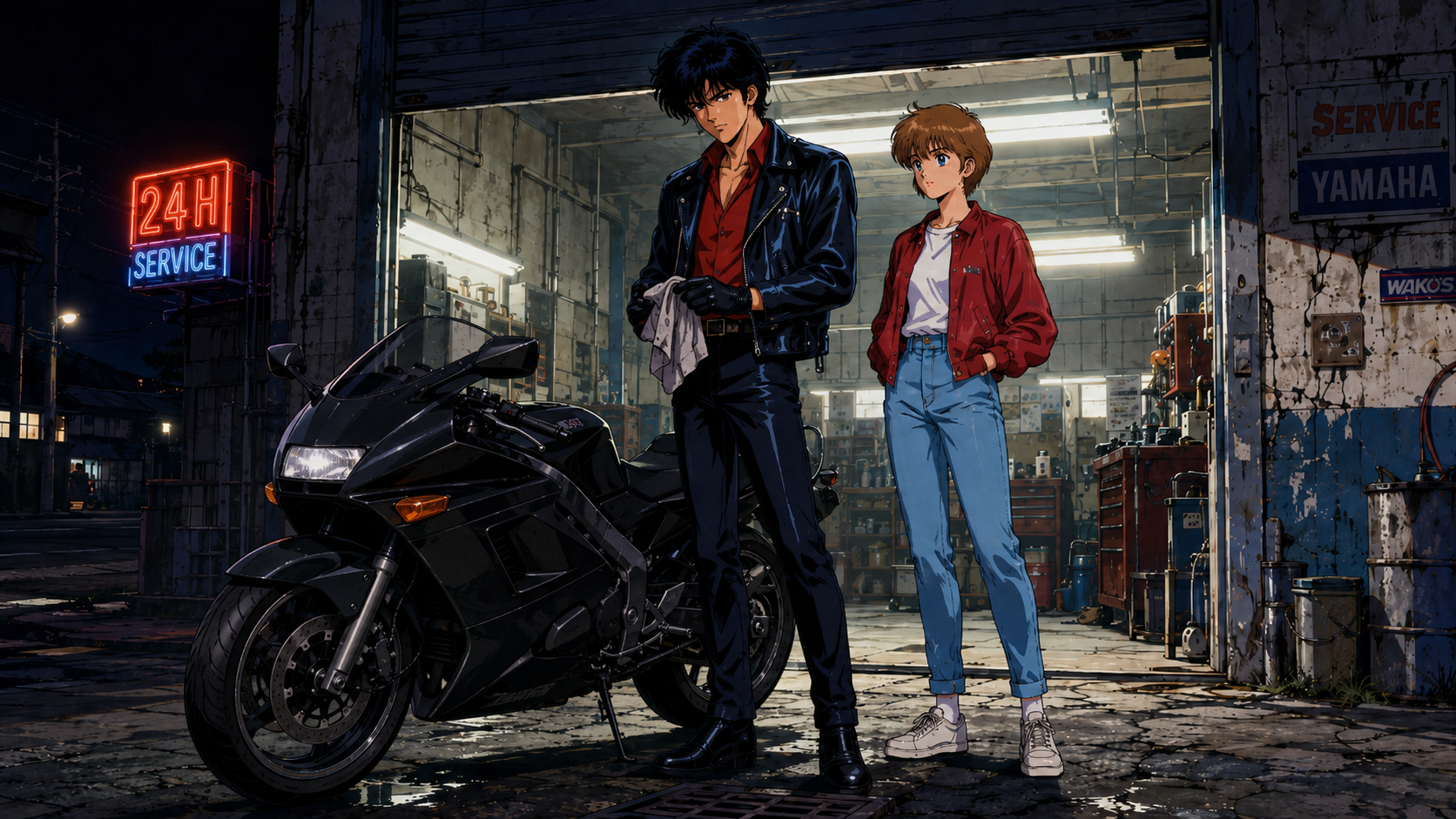
The garage hissed open with a sigh of hydraulics, spilling fluorescent light onto cracked asphalt. Ryoji stood next to the Yamaha SR400, wiping the grip with a cloth like it was a weapon instead of a rental.
I crossed my arms, watching him with narrowed eyes. “You clean every bike like it’s your firstborn?”
He didn’t look up. “I don’t like surprises. Especially mechanical ones.”
“Right. God forbid a loose screw kill us before some psycho assassins do.”
That got the smallest twitch at the corner of his mouth. Not a smile. Just a glitch in the armor.
He threw one leg over the bike and looked at me, visor up, eyes sharp under the garage lights. “Where to?”
I hesitated.
He noticed. “You don’t want to go back.”
“Not yet,” I said slowly. “There’s… someone I should see.”
He waited.
“Shizuka.”
That earned a pause. Just long enough to register the shift in air pressure.
“She still works nights at Cat’s Tail,” I added, a little too quickly. “We write each other. It’s not weird.”
He didn’t start the engine. “You think something will happen.”
I shrugged, suddenly very interested in the shape of my shoes. “I don’t know. I just want to see her.”
Ryoji’s gaze held steady. “The past doesn’t rewrite itself just because you show up.”
“I’m not trying to rewrite anything.”
“Then what are you doing?”
I looked at him firm. “Saying hello. Like an adult. We parted on good terms.”
He tilted his head, expression unreadable. Then he muttered, just loud enough for the echo to catch it:
“You just want to hear the wind crack under a door that closed a long time ago.”
I flinched. Just a hair.
But I didn’t argue. He wasn’t wrong.
“Be quick.”
I nodded, unsure if he could feel it behind him.
We didn’t say anything else.
Not yet.
The wind slipped past my ears, warm and damp, but not unwelcome.
And under it all, the pulse of Tokyo kept beating steady—like it always had.
Like it never stopped, even when hearts did.
The bike Ryoji had picked up earlier hummed beneath us, sleek and silent as we cut through quieter streets. Fifteen minutes out from Shinjuku, the neon dimmed to warm window light and shuttered shops. The traffic eased. The city softened.
We pulled into a narrow side road where a faded red lantern marked a weathered sign: Cat’s Tail Bar.
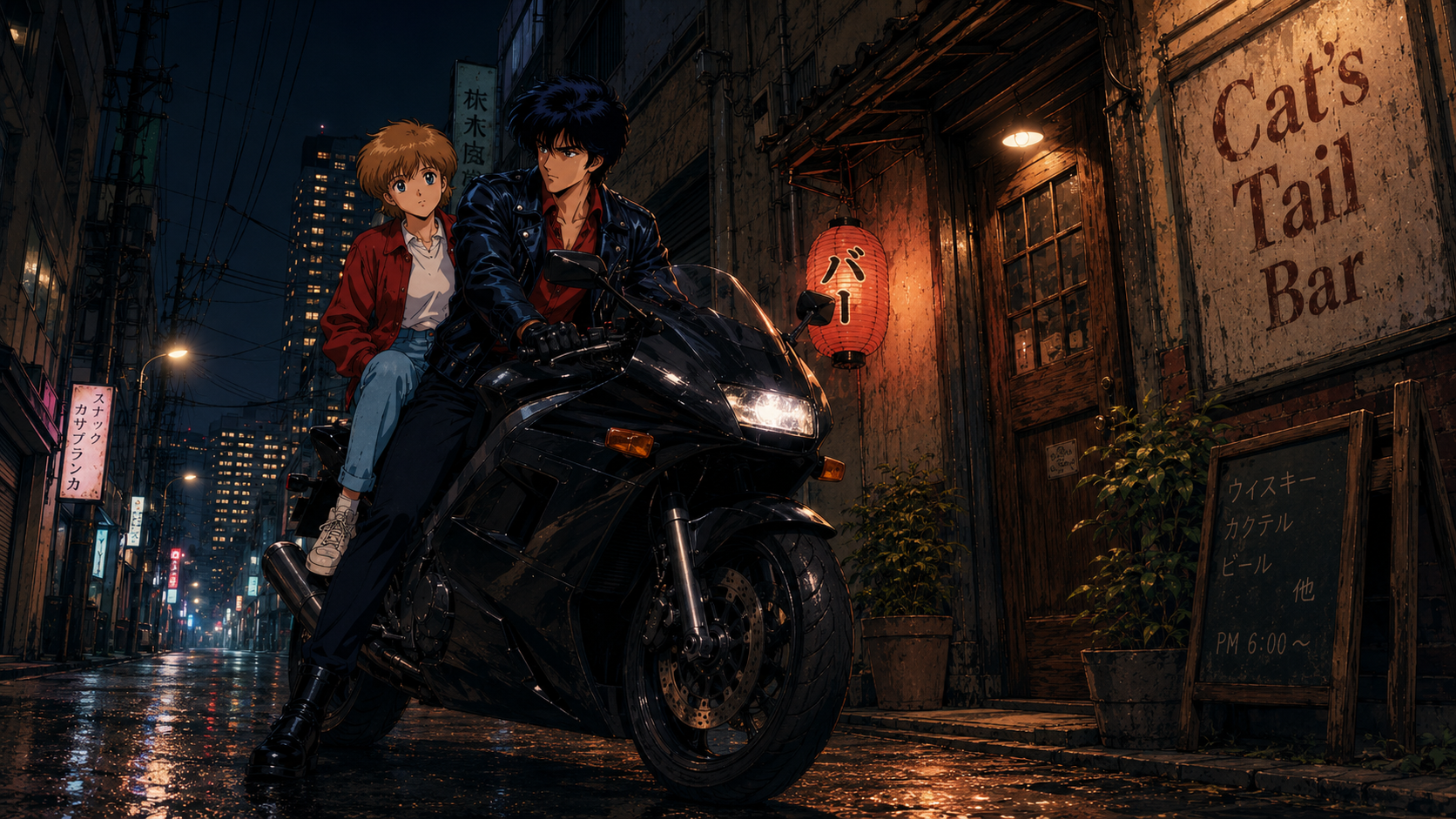
The door chimed softly as I stepped inside.
It was quieter than I remembered—no saxophone playing, no chattering crowd. Just the low hum of the fridge behind the bar and the smell of lemon polish and old jazz in the walls. A couple of tired-looking salarymen nursed drinks near the far corner. One of them barely glanced up.
The owner gave a polite nod from behind the counter, wiping a glass with the kind of routine that could put you to sleep.
And then I saw her.
Shizuka Arisawa.
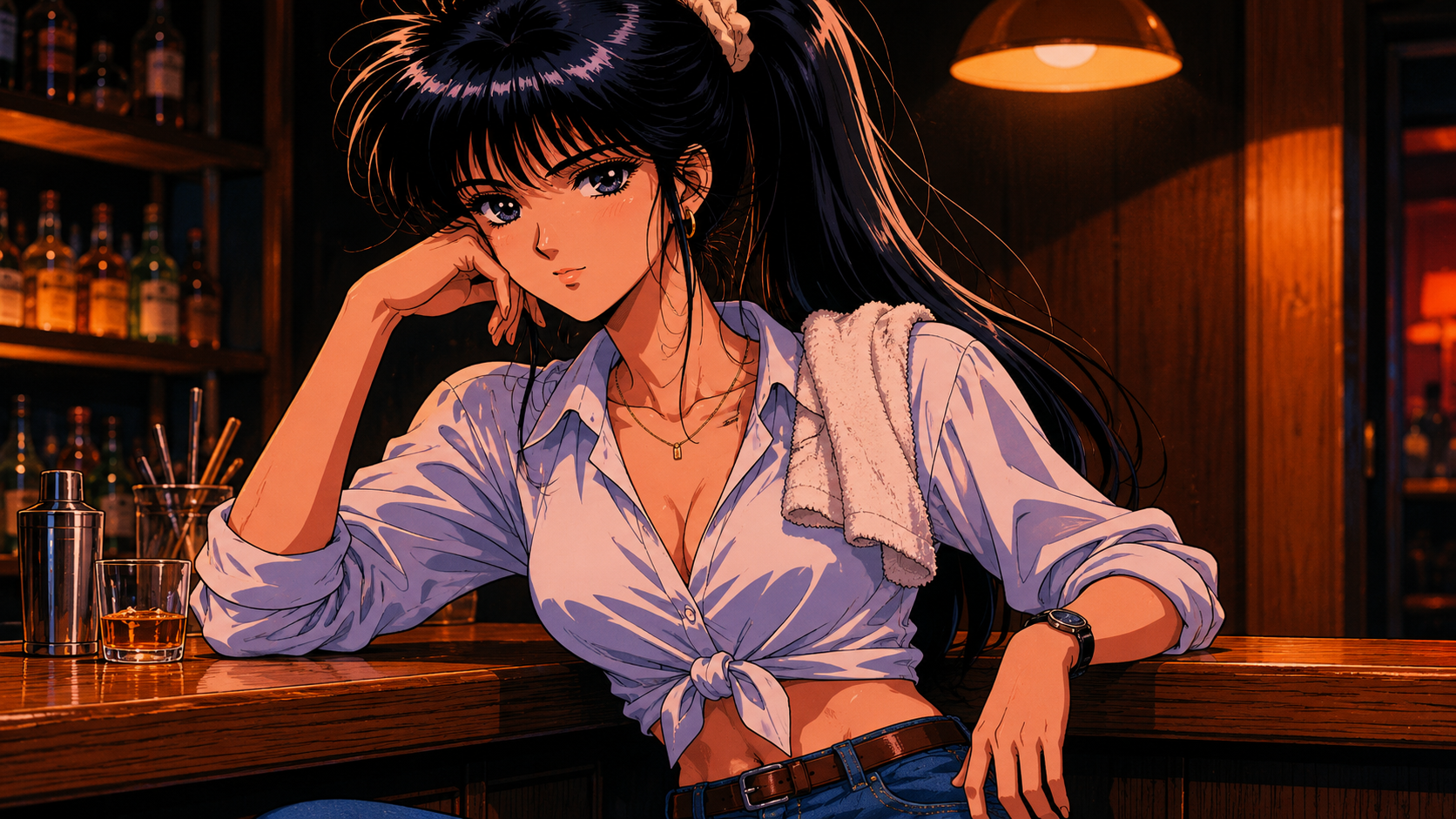
She looked almost exactly the same—same sharp eyes, same impeccable posture, same effortless cool that made you feel underdressed no matter what you wore. The lighting caught her hair just right as she glanced over.
No cigarette this time. Just a bar towel slung over her shoulder and the faintest trace of music playing from the back room.
I felt my chest hitch.
She froze—just for a second. A flicker, barely there. Then she moved—hesitant at first, like her body wasn’t sure it had permission. She stepped around the counter, silent as breath, as if the floor had vanished beneath her feet.
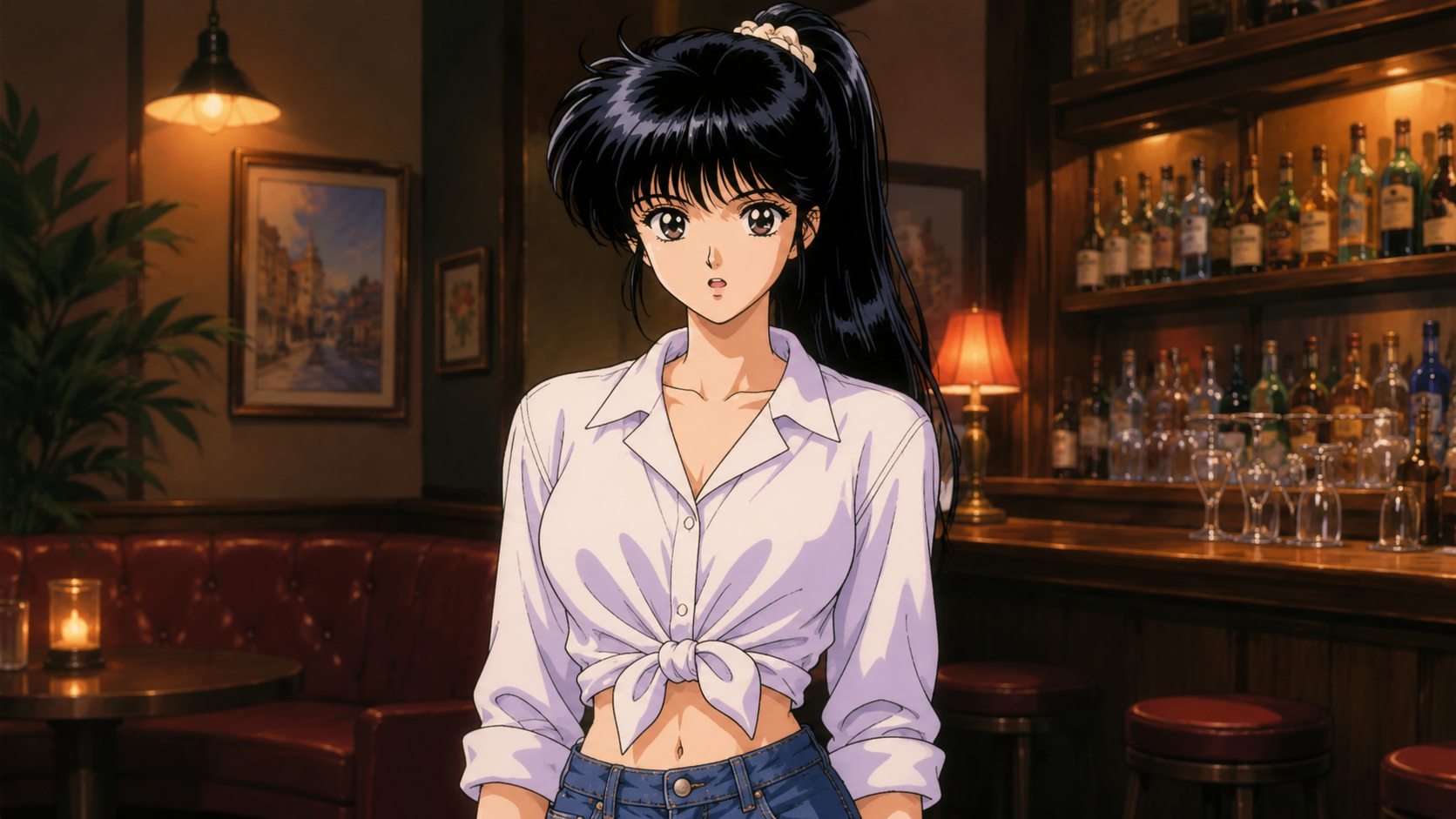
“Natsumi?” she said, voice lower than I remembered. Smoother.
My name hit me like a postcard from a life I wasn’t sure had been real.
I smiled before I even knew I was doing it.
“Hi, Shizuka-chan.”
That was all it took.
She closed the distance and wrapped her arms around me, tight and warm and real. Not the aloof girl with the motorcycle and a pocket full of apathy. Just a friend. Just Shizuka.
I sank into it, letting myself remember. As usual we’re the modern Tokyo girls breaking the Japanese custom with a warm hug.
Behind me, Ryoji shifted his weight slightly, silent as always. Watching. Waiting.
I didn’t care.
For a moment, the world stopped spinning just long enough for two girls to remember they once meant the world to each other.
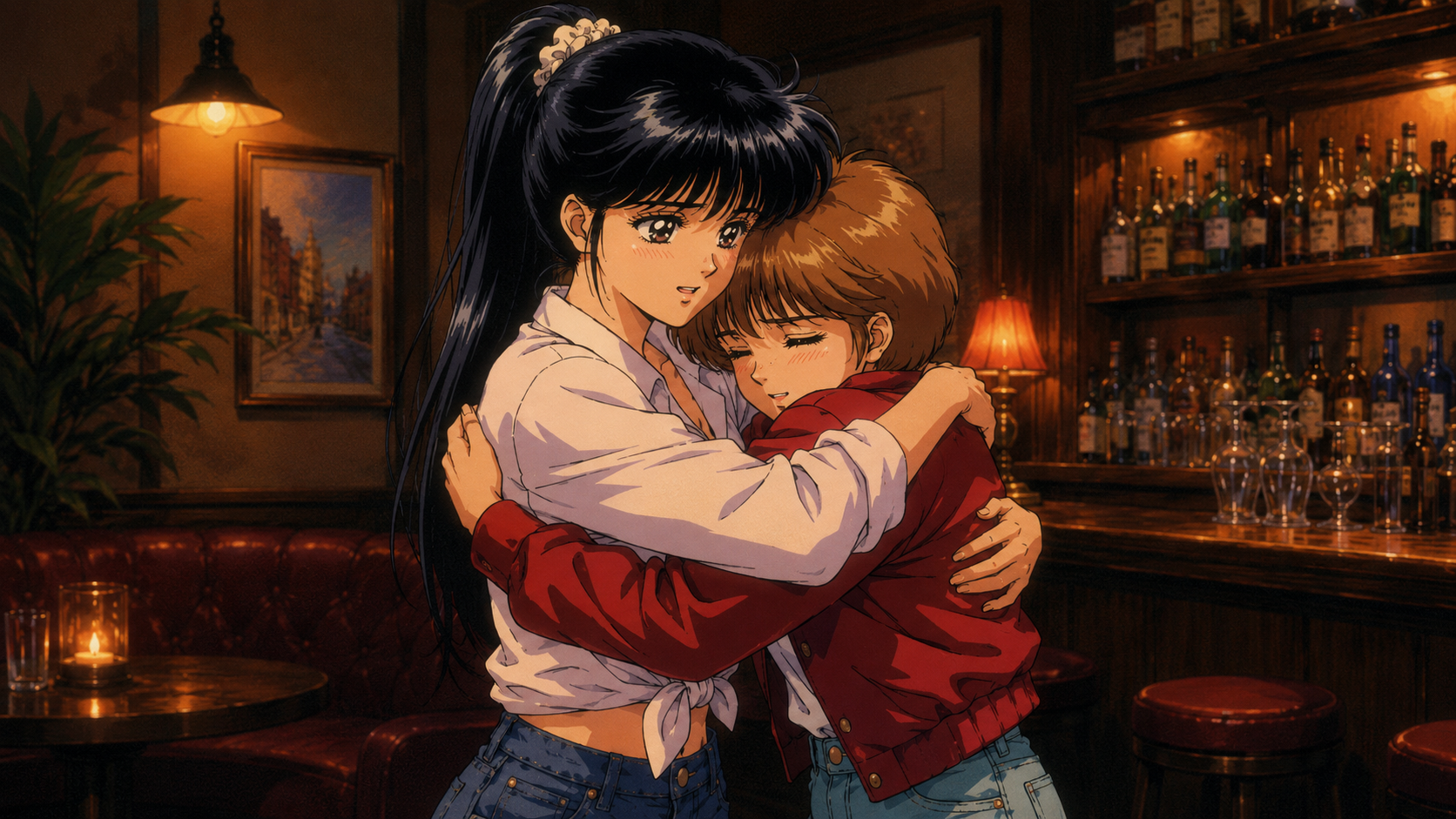
Shizuka held me for a second longer than expected. Like maybe she didn’t realize she needed it until we were already wrapped up in it.
When we finally pulled apart, she kept one hand on my shoulder, eyes scanning my face like she was searching for someone she used to know.
“You cut your hair,” she said gently. “Like in high school.”
I laughed, small and a little choked. “You didn’t.”
Her lips twitched into that almost-smile I remembered—half-resigned, half-affectionate. “It suits you.”
I nodded, swallowing down a knot. “You still smell like citrus and bad decisions.”
“Must be the bar soap.” She glanced at Ryoji, hovering like a misplaced shadow near the doorway. “And you brought backup?”
“He doesn’t bite,” I said quickly. “Usually.”
Ryoji gave her the smallest nod—respectful, but unreadable.
Shizuka’s eyes lingered on him just a second too long. Then she turned back to me, softer now.
“So,” she said, voice low and careful. “How long has it been? A year?”
I nodded. “Yes.”
“And the last letter was… February?”
“March,” I corrected. “You were complaining about the jukebox eating your coins.”
Her smile widened a notch. “Right. And you were sending me Polaroids of Rome like you were trying to convert me to Catholicism.”
“I was just showing you the churches. You’re the one who said that one statue looked like Kyoshi mid-freakout.”
We both laughed—nervously at first, then full and real.
The silence that followed wasn’t awkward. Just full.
“So,” she said finally. “Why now?”
I hesitated.
Ryoji didn’t move. Didn’t prompt me.
I looked at Shizuka and tried to be honest.
“Legal issues with my old house.”
Shizuka’s expression softened, something flickering behind her eyes—surprise, maybe. Or understanding.
“Well,” she said, voice low. “Welcome back.”
Shizuka guided us toward a booth near the bar—low vinyl seats, the kind that cracked faintly when you sat down, still the same faded red from before. The jazz was low tonight, brushed drums and distant sax, like the room itself had an inside voice.
Ryoji lingered for a moment, eyes scanning the space—doorways, exits, the line of sight from the street-facing window. His hand brushed lightly against the tabletop before he sat, like he was checking for dust or fingerprints.
Shizuka’s gaze flicked toward him, amused. “So,” she said, sliding into the booth across from us. “Tall, silent, and clearly carrying several sharp objects.”
I raised an eyebrow. “Oh, he’s great on long flights. Knows all the emergency exits by heart.”
Shizuka smirked. “And what exactly is he? Your agent? Your handler?”
I shrugged, leaned back a little. “My boyfriend.”
Her eyes widened—just slightly—and then she laughed. That cool, low-chime laugh I hadn’t heard in so long. “No way.”
I was about to elaborate, maybe walk it back with a grin—when Ryoji cut in, voice dry as static.
“Bodyguard.”
Both of us turned to him. He didn’t flinch, didn’t look up from the faint condensation on his untouched glass of water.
Shizuka blinked, then looked at me. “Bodyguard?”
I sighed. “Yeah. Long story.”
“I bet.” Her gaze lingered on Ryoji a second longer. “And does he come with a safety manual?”
“Chapter one’s Don’t Ask Too Many Questions,” I said.
“Chapter two,” Ryoji added, “is Stay Where I Can See You.”
Shizuka looked between us, clearly enjoying the back-and-forth more than she let on. “You always did attract the complicated ones.”
I smiled faintly. “Guess I’ve got a type.”
The tension—whatever there was—melted back into that easy rhythm we used to have. But Ryoji’s presence, solid and quiet, was like a stone dropped in the middle of it. Not disruptive. Just undeniable.
Shizuka sat back and crossed her arms, studying him again. “So. Bodyguard, huh?”
He finally looked at her. “Exactly.”
Something unreadable passed between them. Not interest, not quite suspicion. Just two wolves sizing each other across a table made for drinks, not truths.
I exhaled, steadying myself against the slow, strange pull of this place—how it made the past feel both near and too far to touch.
Shizuka had just finished wiping down the countertop when she turned to us again, her voice gentle but with that familiar, wry undercurrent.
“We’re having dinner at the Kuroda place tomorrow. Just us and Kyoshi. You should come.”
The air shifted.
Her eyes flicked between mine. “He’ll be happy to see you.”
I froze.
Just long enough to notice how Ryoji’s shoulders stiffened—barely, but enough. He hadn’t moved since sitting down, but something in the way he exhaled told me he was already preparing a response.
Shizuka kept her smile soft. “It’s been a while, I know, but we’re not strangers, right?”
I opened my mouth—somewhere between “I’d love to” and “I don’t know”—but I didn’t get the chance.
“No,” Ryoji said.
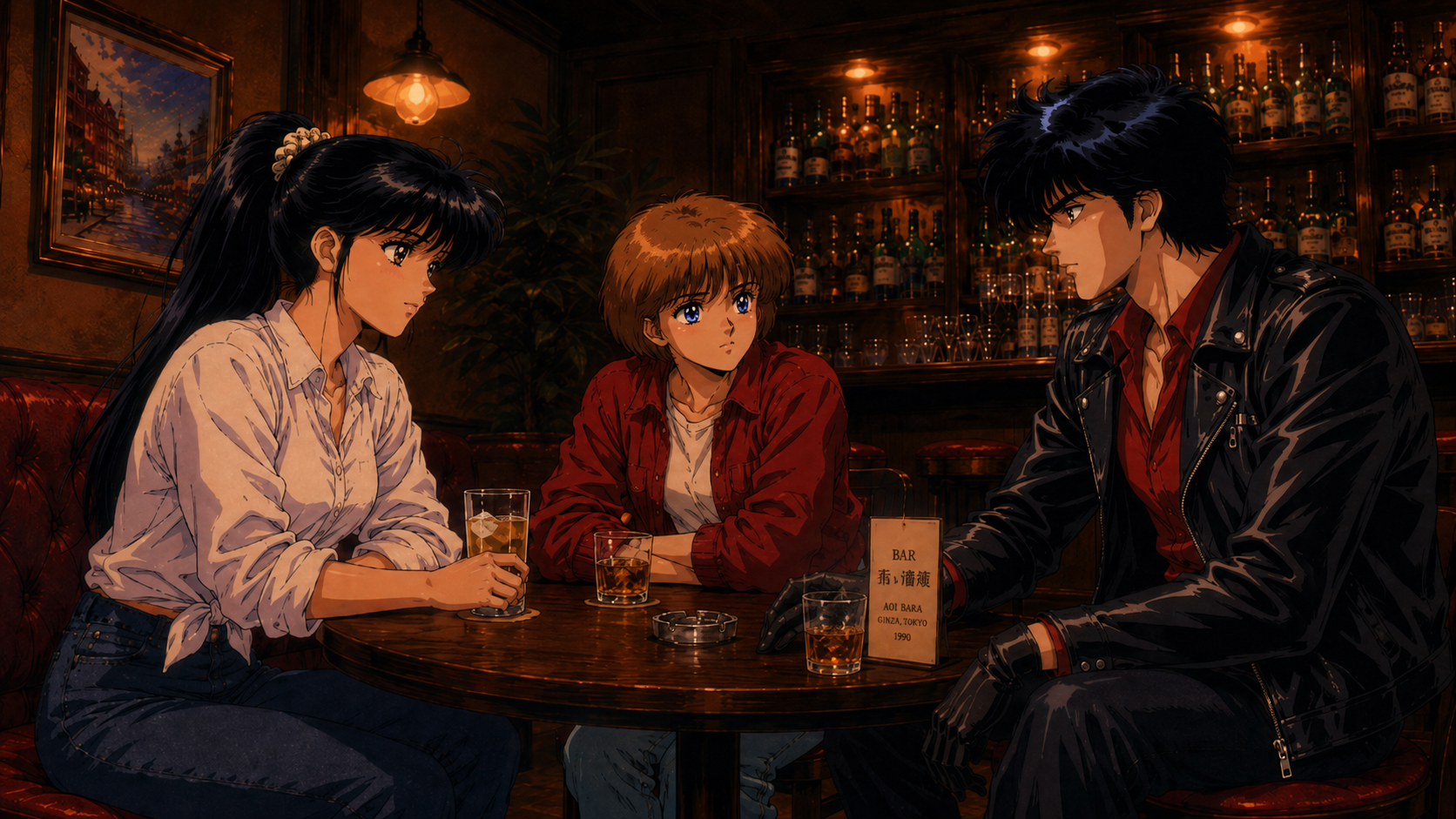
We both looked at him.
“No?” I repeated, frowning.
“You’re not going.”
Shizuka raised an eyebrow. “Excuse me?”
I turned fully toward him, incredulous. “You can’t just decide that. Who made you the boss of my life?”
His tone was low, steady. “You did. I’m your bodyguard. I decide what keeps you breathing. Not what makes you nostalgic.”
“I’m not in danger, I’ll be with old friends. This isn’t a spy op, it’s grilled mackerel and awkward small talk!”
“If you go, I’m done.”
I blinked. “What?”
“I’ll pull out. You walk into that house, I walk out of this job.”
“You can’t,” I snapped. “You signed the contract. You’re bound.”
That smirk again. Barely there. But this time, it hit like a sucker punch.
“I said I’d sign it when we got back to Italy.”
My stomach dropped.
“You’re kidding.”
“I don’t joke.”
“You said you’d take the job—”
“I am taking the job. But I haven’t signed anything. Which means if you don’t cooperate, I take off. You took the trip breaking the company policy and your Madame Luciana’s in trouble for letting you.”
“You rigged this,” I muttered. “Made sure I couldn’t say no.”
He still didn’t look at me. “No. I made sure I could do my job.”
I gritted my teeth. “What’s so dangerous about going to an old friend’s house?”
Finally, he turned his head slightly. Just enough for the fluorescent bar light to catch the shift in his expression—something colder than disapproval. Something like worry in armor.
“It’s not strangers in alleyways, most civilian murders are personal.”
Shizuka tilted her head, crossing her arms. “Bit dramatic, don’t you think?”
“I don’t bring someone I’m responsible for into a romantic minefield,” he added, the words cutting clean.
I hated how easily he shut things down. Like safety was something you could plan for. Like people weren’t messy, or aching, or still figuring it all out.
Before anyone could answer, the sound came—low and growing fast.
The grumble of engines.
Not one.
Half a dozen.
A dozen.
The kind of thunder that doesn’t belong to passing delivery trucks or salaryman scooters.
Outside, the street lit up with red taillights and metallic reflections. Shadows moved past the bar windows in clusters. Chrome glinting under street lamps. Helmets. Jackets. Noise.
Then a voice—sharp, feminine, cutting through the engine rumble like a katana.
“Hey! Gaijin!”
The bar froze.
Chairs stilled.
A glass clinked too loud at the far end of the counter.
I turned toward the door. So did Shizuka.
But Ryoji didn’t flinch. Didn’t blink. Just reached down without looking and adjusted the strap on his boot, like he was resetting a switch.
The voice called again, closer now, playful and razor-edged:
“Come out, leather boy! Or do I have to drag you by the collar?”
Ryoji exhaled through his nose.
Shizuka leaned slightly forward, voice dry. “Friends of yours?”
No reply, he just stood.
And his eyes, when they met mine, weren’t cold.
They were focused. Dead calm. Waiting.
“Stay here.”
And with that, he moved toward the door. Not fast. Not slow.
Like he’d been waiting for this moment since we arrived.