Tokyo Arc - Act I — Chapter 04
Takoyaki Street
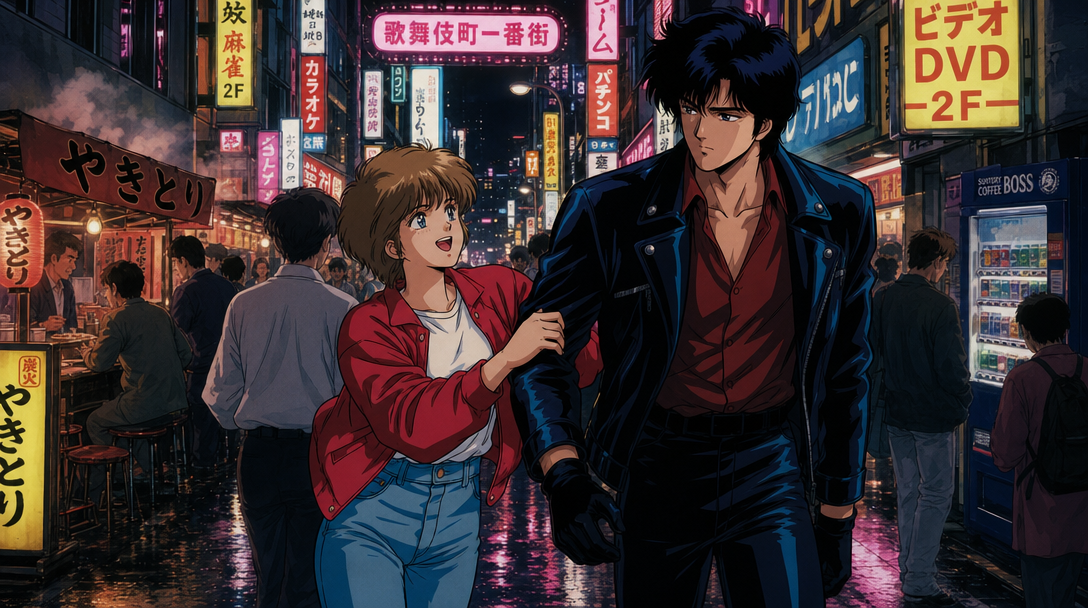
The neon buzzed just the way I remembered—soft, uneven, like a broken lullaby. Salarymen laughed too loud outside izakayas, the smell of grilled meat clinging to their suits. Pachinko parlors howled like arcades possessed. Every corner glowed with the promise of something nostalgic, or cheap, or both.
Ryoji walked a step behind, always at an angle. Like he was triangulating threats with every footstep. One hand in his jacket, the other brushing past door frames like they held invisible triggers.
“I don’t know how you do it,” I said, grinning over my shoulder. “You walk like you’re casing a scene from Shinobi no Mono.”
“I don’t like surprises,” he said.
“Then Tokyo’s your worst nightmare.” I gestured to a small takoyaki stall nestled between two vending machines. “Come on. That place has been here forever. I used to go with—”
I stopped myself.
Ryoji didn’t react. Not yet. He was already stepping forward to order, wordless as always.
He handed over yen with one hand, accepted the paper tray with the other, and turned back to me. “Here.”
“Thanks.” I took it quickly, grateful for the distraction.
The octopus balls steamed between us, flakes of katsuobushi writhing in the heat like they were alive. We kept walking. I chewed. Tried not to think.
“Someone important?” he asked, voice flat.
“Yeah. Sort of.” I tried to wave it off. “Just old memories.”
“You’ve tripped on two of them in three minutes.”
I blinked. “Excuse me?”
“First the food stall. Now you’re analyzing every doorway like it holds ghosts. You stumble when your footing should be sure.”
“You’re analyzing me now?”
He didn’t look at me. “If something happens tonight, I need to know if you’ll freeze.”
“Wow. That’s… not exactly gentle.”
“I’m not gentle.” He paused. “Who’s living rent free in your mind then?”
I looked down at the tray in my hands.
“Nobody,” I said quickly. “Just… old history. Closed book.”
He didn’t move. Didn’t blink.
“Fine. Two people I thought I knew. Turned out I didn’t know anything.”
“That happens,” he said.
“That’s it? No ‘I’m sorry’ or ‘you deserve better’?”
“Everyone gets heartbreaks. It’s part of the game. Especially if you spent your teen years in a big city like Tokyo.”
I stared at him. He looked calm. Unmoved. But I noticed the shift in his posture. The tiny flex in his jaw.
The silence after that wasn’t cold. Just quiet. Just honest.
We finished the takoyaki. The neon hummed.
I tossed the empty tray into the nearest bin and wiped my fingers on a napkin. “So,” I muttered, trying to sound lighter than I felt, “guess that answers your stability question.”
Ryoji didn’t answer right away.
We were stopped at a crosswalk. The red light washed his face in brake-light crimson. He didn’t look at me when he spoke.
“You used to wear your heart on your sleeve.”
I blinked. ”…Yeah. And?”
He turned slightly, just enough for me to catch the glint of streetlight in his eyes.
“Now you wear your heartbreak. Loud.”
The words hit like a slap wrapped in velvet. No anger. No malice. Just cold, clear observation.
I stiffened. “That’s rich, coming from a guy who hasn’t smiled once since Venice.”
“I don’t need to smile. I need to assess.”
“Well, congratulations. You’ve assessed me. And?”
“And if you drag old wounds into a new life, you’ll pay the price.”
My breath caught. That wasn’t fair.
“That’s not what this is,” I said, voice low, brittle. “I’m not—dragging anything. I’m just—”
I looked away. The city blurred behind my eyes.
Four years. Four years since I’d walked these streets as someone else entirely—someone who believed in forever and thought heartbreak was something that happened to other people.
Back then, every corner held a promise.
That convenience store where Kyoshi bought me chocolate after our first fight.
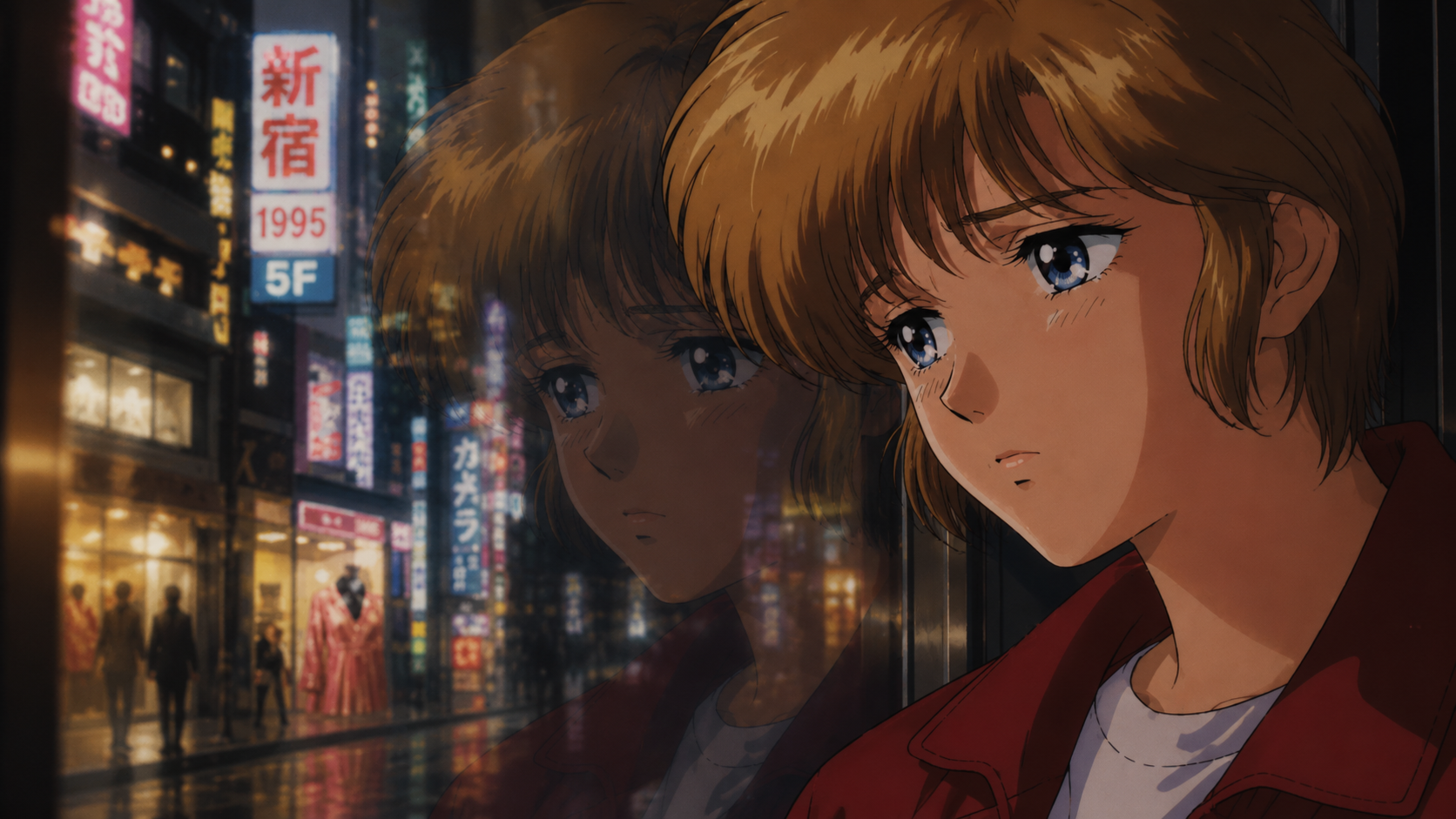
The bridge where Shizuka and I stayed up all night talking about dreams that felt so close we could taste them.
The ramen shop where the three of us squeezed into a booth meant for two, laughing until our sides ached, thinking we’d found something permanent in a city that ate permanence for breakfast.
I used to love Tokyo’s sleepless pulse, how it thrummed with a thousand possibilities. Now every neon sign was a taunt, every narrow alley an echo of laughter I’d never hear again.
The city hadn’t changed—I had.
And maybe that was the real cruelty of it. Tokyo kept spinning, kept buzzing, kept promising, while I stood still in the wreckage of what I thought was love.
Then he added, quieter, “I’m not saying don’t feel it. I’m saying—don’t lead with it.”
We crossed the street in silence.
I hated that he was right. I hated how cleanly he’d seen through the scaffolding I’d built to stay upright.
And yet—somewhere in that harshness, there was a strange kind of care. Not softness. Not empathy. But precision. Like someone sharpening a blade they didn’t want to break.
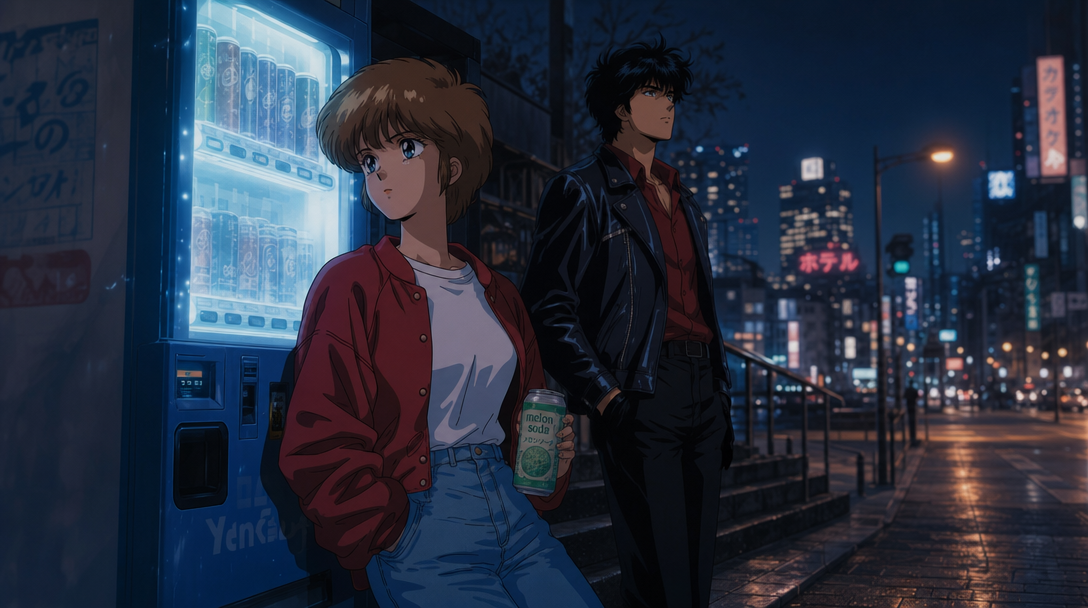
I slowed down near a vending machine glowing faint blue, the kind that only sold canned coffee and melon soda. I pressed a coin into the slot just to keep my hands busy.
Ryoji waited a step back. Guarding. Watching. Always watching.
I popped open the can. Didn’t drink.
“You ever get tired of being right?” I asked.
He didn’t move.
I sipped the melon soda, even though I didn’t want it. Just needed something cold. Something to hold back the tears.
Ryoji stood still beside me, arms crossed, gaze locked somewhere past the skyline. He hadn’t softened. Not really. But his silence was starting to feel less like a wall, and more like a waiting room.
“It’s tough in these streets,” I said quietly. “The memories.”
That earned a flicker—barely there, but I caught it. A curve at the edge of his mouth. Almost a smirk.
Then, before I could say anything else, his hand was on my arm. Not rough. Not tender. Just enough pressure to guide.
“Come on,” he said.
I followed. Because when a walking enigma like Ryoji tells you to follow, you just feel compelled to.
An arcade blinked across the street—half of its neon letters flickering in and out, casting red and blue flashes over the sidewalk.
Somewhere inside, I could hear the tinny shriek of a fighting game and the distinctive chirp of a UFO catcher.
“You?” I asked, stepping up beside him. “You go to arcades?”
He didn’t look at me. “Used to.”
I stared. “Let me get this straight. You—Ryoji-of-the-silent-footsteps-and-murder-eyes—spent time in arcades?”
He paused at the entrance, letting a couple of teenagers push past us with bags of coins and too much cologne.
Then he said, flatly: “I like claw machines.”
I nearly choked on my soda. “No. No, that’s not real. You like UFO catchers?”
He pushed open the glass door, the warm buzz of machines spilling out. “They’re cool. Objective-based. Clear reward structure.”
“That’s the nerdiest thing I’ve ever heard you say.”
I followed him in, dazed. The air was electric—warm, slightly dusty, with that familiar cocktail of metal coins and overheated circuitry.
He moved through it like he belonged. Calm. Unbothered. Like this was his battlefield.
“You’re not what I expected,” I whispered.
He glanced sideways. “What did you expect?”
“I don’t know. You strike me more as the guy who broods on rooftops. Maybe sharpens knives while listening to wind chimes.”
A brief pause.
“I do that too.”
I cracked up, the laugh catching me off guard. I felt it in my shoulders. The real kind. The kind that leaves no room for ghosts.
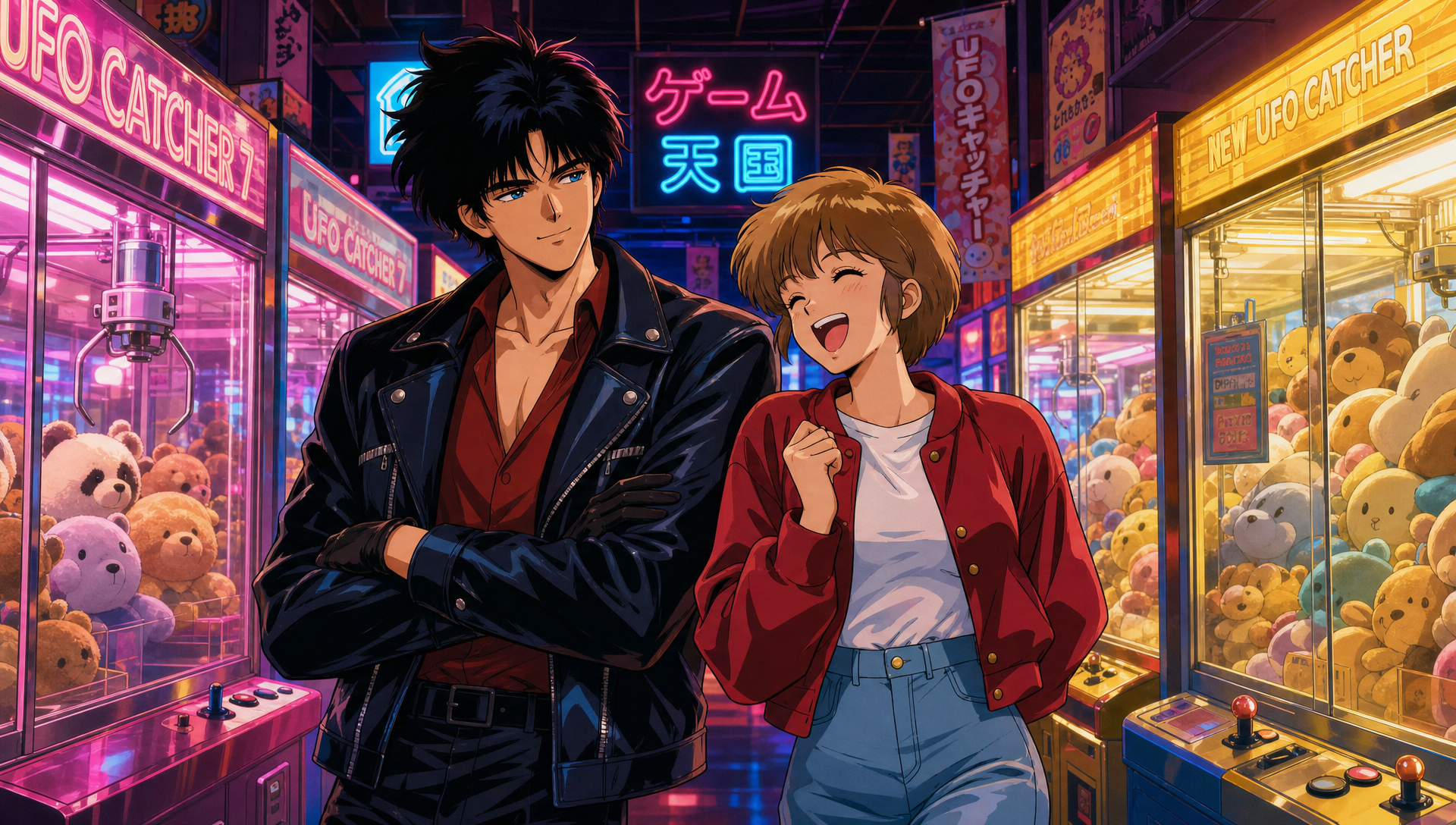
He watched me laugh with that same analytical expression, but something had shifted. Less like he was measuring my stability, more like he was cataloguing a small victory.
“Better,” he said simply.
And for the first time since we’d started walking, Tokyo didn’t feel quite so haunted. The neon still buzzed, the salarymen still laughed too loud, but the city felt less like a museum of old wounds and more like—well, just a city.
A place where someone could buy you takoyaki and call your heartbreak what it was, then drag you to an arcade because sometimes the best cure for overthinking is a claw machine and the promise of something ridiculous.
I wiped my eyes, still grinning. “So what’s the success rate on those UFO catchers anyway?”
“You’ll see.”